Now that we’re at the end of this series of gratitude blogs, I think it would be nice to take a moment to reflect. The thing that I’ve loved most about this Attitudes of Gratitude blog series is that it has been a constant, monthly, reminder to me to find joy in what I, what we all, do—teaching. Sometimes, this can be incredibly challenging. I think we’d all agree that teaching requires a lot of humility and patience, and it takes a lot of time to see the rewards of our labor. We plant seeds, figuratively speaking. We plant knowledge and tend to that knowledge within our students as best we can, but it can take years for us to see how that labor pays off in the kids we teach/have taught. And in a career where we’re often seen as “underpaid and overworked” gratitude for the work we do goes a long way. For me, writing these blogs has been like a lifebuoy during this challenging year of transitions from a COVID to post-COVID environment. This month, we hear from the 8th graders and their thoughts of gratitude for the 8th grade team. I hope you all find as much joy from it as I have.
“I love Dr. Kunzelman’s class; we actually learn while having fun. She is an experienced teacher, and I can tell she knows how to handle us. Plus, she’s really cool 🙂 I know that all the other students think this too. We do these really fun labs in groups, and they test us on our knowledge of the subject.”
“I like Mr. Buckley’s attitude towards learning. You can tell he is very dedicated to what he teaches. Mr. Buckly is also a really nice guy, and you can come ask him about anything.”
“Mr. Cooper is one of my favorite teachers because he is always there offering his support, and he is really good at teaching Math. He’s always checking in and asking how we’re doing, and he does his best to consider what we are going through when it comes to homework and what we do during class. Besides this, he does a great job explaining new mathematical topics and giving good ways to practice math. He is also my advisor, and I have a lot of fun being one of his advisees.”
“Señor Tokarski is just amazing; he’s my favorite teacher of all time. I don’t even need to study that much for his quizzes because of the way he teaches the material. He repeats the vocabulary over and over again, and he makes us read sentences out loud over and over again to help us learn quickly. He keeps the class busy, and he gives us assignments that make us actively use our brains and translate, and it makes us keep our mind active, so we actually learn, and it sticks. He is just amazing! I wish he didn’t have to leave. I know that he really cares for us and wants us to become fluent Spanish speakers. He is way too amazing. I know that wherever he will go, he will have a large group of fans like me.”
“Art class is exciting with Mrs. Irons because it’s fun and improves my creativity.”
“Mrs. Price is a very good teacher because she always helps us whenever we are struggling. We get lots of practice with speaking, and we get to talk about our families in French and other things about our lives. To help us memorize our vocabulary we usually work in groups, and try to say things using those words.”
“I enjoy Mr. Hosler’s class very much because he always tries to make English fun for us, even when whatever we’re learning about seems boring. He also always tries his best to make all his lessons fun and gives us a lot of class discussion time to express our opinions.”
“Mrs. Johnson is one of my favorite teachers because she is very helpful and always understands if you have to be absent from her class. Another thing I like about her is that she is a good teacher and friendly, but still disciplines people.”
“Mr. Rodgers is one of my favorite teachers because he is caring and understanding. He also interacts with all the students and makes them feel comfortable talking with him. Anytime I talk to him, whether I am alone or with friends, we have great conversations.”
“Mr. Cooper’s class is one of my favorites because he does different things to teach us. He gives us lots of examples, and gives us real word examples. Mr. Cooper is also very nice and funny, and it shows that he cares about us.”
“Señor T is one of my favorite teachers this year because he makes sure that we learn as much as we can during the school year. He makes it fun and enjoyable to learn Spanish. We learned so much from him this past year, and I appreciate all of the work that he did for us.”
“Dr. K’s class is really fun because she organizes lots of different activities for us to do. Class varies a lot which helps us learn science topics in lots of different ways. Dr. K is also really nice and helpful when it comes to Science and other things that us students need.”
I am sure you are thinking, “No way! No how!” but just hear me out.
I am not talking about real social media such as instagram, facebook, snapchat, etc. (I truly am not that crazy.), but a safe, secure environment for students to share ideas and work, collaborate with their peers, get valuable feedback from classmates and teachers as well as create their own learning portfolio or timeline.
If you were to google “Seesaw app” or look it up in your devices app store, you would immediately wonder, “What? Which one am I supposed to use?” Seesaw has two apps that, although operate similarly, have two very different applications. Seesaw Family and Seesaw Class. Think of it like two sides of the same coin.
Our Foundations and ECC families are already familiar with Seesaw Family. Seesaw Family, very simply put, is a secure way to share snippets of the day with parents. Our teachers do a wonderful job of posting pictures to Seesaw Family, which functions similar to a classroom instagram or facebook. The only difference is that the posts, pictures, and videos are only accessible by the teachers and the parents that are linked to their child’s Seesaw class.
I love that our Foundations and ECC teachers go the extra step to post moments from the school day. I really think it helps parents feel more connected to what is happening during their child’s time at school. (Can you imagine anything better than getting an alert that a new post was made to your cutie patootie’s Seesaw class, and opening it to discover a picture of your child and their classmates hard at work? Or maybe a video of them singing in music? Or maybe it’s just a huge grin that can turn a gloomy day around?) Seesaw Family does that!
Now the other side of the Seesaw coin is Seesaw Class. (Excuse me while I take a deep breath to avoid rambling on in all of my excitement and love for Seesaw Class!)
Seesaw Class is a secure, teacher monitored, and CONTROLLED environment for students to post, share, collaborate, and participate in both giving and receiving critical feedback.
Let me tell you a story. It will be quick, I promise.
Several years ago, while teaching 6th grade reading, I desperately wanted to find a way for my students to blog, comment, and discuss take-aways from their reading. I spent hours of the very limited time I had looking for a website or way to make this happen. I thought I had found the perfect site! It met my criteria for allowing me, the teacher, to view and approve the student’s work before it was viewable to the rest of the class, let all approved members post, reply, and comment, and it did NOT have a private messaging option for student-to-student communication.
I set up the classes, showed the kids how to use the site, set clear expectations, and thought we were ready to hit the ground running. The kids would be able to post a blurb each morning, reply to some of their peers, and smooth sailing, right?!?! WRONG. We got one error after the other. It started blocking the kids from posting or replying because only so many participants were allowed to post within some arbitrary timeframe, etc. Needless to say this was one of those times when technology is NOT your BFF and quickly becomes your worst enemy. (Technology is a tool to HELP, not make life more difficult, right?) Abandon ship! Abandon ship!
Available options for activities such as this have come a very long way since then, and believe it or not, Seesaw is one of those tools that can easily be used in many different classrooms and in a variety of ways. (Seesaw would have been PERFECT for that 6th grade reading activity… Snap a picture of a text, annotate with the drawing tool, explain the relevance with the recording tool, and post away!)
Seesaw Class is such an engaging way for students to share their work, develop accountability, and all while documenting the process of learning. Let’s face it, a school year is a REALLY LONG TIME for a student. It is easy for them to forget how far they have come and how much they have grown when they are in the day-to-day of school and the challenges of new skills. Creating accountability through the process of documenting and posting in Seesaw easily allows students to look back at what they have accomplished, see their growth, and easily create a portfolio of what they have learned.
There are so many ways to use Seesaw by teachers and students, that the tool can really become whatever the teacher wants it to be, and all within a safe, controlled environment.
Students can document the steps of a lab experiment in science class, document the progress of their creativity coming to life in art, record and post clips from music, practice reading fluency and post the recording with a picture of the page, ask for ideas from their peers when they are working on a engineering challenge, share their accomplishments and celebrate success with their friends, make book recommendations from the library. This little hidden gem of technology has too many cool ways to be applied in the classroom, I could not even begin to try to count.
Though my colleague and friend now, Ray McFarland was once my high school advisor who let my graduating class of seniors have a lock-in at the then brand new CPA. Talk about cool. He was also the actor that my family and I loved to watch at New Stage Theatre in Forever Plaid and The Foreigner and Hairspray and so many others. Talk about talent. As his colleague, I have been lucky enough to be equal parts hiding-behind-my-hands terrified by Ray’s performance as Krampus at the band concert and jaw-droppingly mesmerized by his singing of “Amazing Grace” in chapel. Talk about range. And for 23 years, this gem, who is both a premier do-er and teacher of his craft, has belonged to us at St. Andrew’s.
When Ray returned home to Jackson in 1998, St. Andrew’s lucked into convincing this law-degreed professional New York actor and self-professed “Sondheim freak” into helping out with coaching speech and debate (thank you Randy Patterson and his happenstance run in with Ray at a movie!). And then the next year Dave Wood hired him on an hourly basis (can you even imagine?) and then the rest is history. The opening of the CPA a few years later in 2002 made the decision for Ray about staying at St. Andrew’s for the long term. Having directed plays in the Commons for the years up to the CPA’s opening and having intimate knowledge of New Stage Theatre, Ray knew the CPA was something special. As is he. Ray is wholly responsible for the reputation of excellence that surrounds our theater: the physical space, the programming, and the productions.
Now that we have lived with the CPA for 20 years, “we often take this building for granted,” Ray said, especially because it is easy to forget how special it is and how unparalleled it is for a school in our state. When guests come from out of town to New Stage, Ray says, “I always bring them to the CPA and show them around.” Ray’s care and devotion for this unique building as well as the programs that are housed within it have made our St. Andrew’s theater department the icon it is today. Besides developing the tech program and growing acting classes across his 23 years here, I also cannot count the number of times I have watched him vacuuming the carpet in the CPA or mopping the stage or moving furniture or working lights or doing any number of tasks simply because he cares and they needed to be done. His desire for the longevity of the building and the program was clear when I asked Ray what he desires for his legacy here. Pretty simply, he said, “I want the theater program to continue. Because it’s not just me. It’s this facility and it’s the students.”
When I asked Ray why theater is so important, without hesitation he said, “It’s vital. Entertainment is a basic human need, and theater involves total communication. Everyone needs a diversion.” Especially with the backdrop of a pandemic, Ray said he always reminds his students before a performance: “For two hours, we’ve got their minds in the palm of our hands.” For those hours, people do not have to think about anything else and can devote their attention to one thing only; for that reason, theater can even become a “religious experience.” As my Classics friends know, Horace says the aim of any poetic endeavor is “to teach and to delight”; performance is no exception. One of the reasons that Ray says “without a doubt” Sondheim’s Side by Side is his favorite musical (besides the music) is that the lyrics are always a story and through them we are always learning something about a character (and then often about ourselves).
Besides Side by Side, his personal favorite musical to watch, I asked Ray which performance he directed here was his favorite or most memorable. Apparently, this question is somewhat akin to asking a parent who their favorite child is. Ray said he could name so many, but the first one he recalled, Into the Woods, had 32 “amazingly talented kids” in it. Ray also went on to say he loved the “spectacle” of Sweeney Todd. Reminiscing on building the elaborate set for that show, he said one day he brought some materials in for his tech class and, with little instruction, told them that the set needed a barber’s chair under which a trap door opened. His tech class ran with it, designing and creating the perfect chair for Sweeney Todd’s victims to fall through; the chair was apparently so perfect that it apparently lived in the McRaes’ house for several years after!
And, of course, earning a well-deserved and sentimental spot in his top three is the most recent, and Ray’s final act, Little Women. In talking about what the students were able to do with this production, Ray called it both “magical” and “astounding.” What created this magic? Besides individual talent, Ray says, “They bought into what I preach: it’s about the group.” From his perch in the tech booth, Ray said, “I missed cues because I was so wound up in it.” Imagine those of us seeing it for the first time in the audience. I saw it only on dress rehearsal night and was blown away, and my mother wept all the way through it next to me.
As expected, Ray had an elevated element of sentimentality as this was his final production. On the day of the last performance, Ray said he mopped the stage for the final time and cried all while mopping. Then he said he cried all the way through that Saturday night performance. At the end, he heard chatter on the headset saying, “turn the lights back on,” and then heard Anna Johnson say, “He’s going to be so mad,” anticipating Ray’s resistance to being recognized one last time. However, Burkitt Anderson, next to Ray in the tech booth, looked over and said into his headset mic, “Nah, he’s already crying.” So when I asked Ray if he was pleased with his last production, he said immediately, “It couldn’t have ended better.” No, it could not, Ray; it certainly could not have ended better. And for that and a million other things, we thank you, Ray McFarland.
Last month I blogged about the theme of this spring’s set of podcasts: bridging the faculty/admin divide. It’s a topic near and dear to my heart, and it’s one that has produced a host of complex topics of conversational focus, thanks to the faculty planning and hosting. In this inaugural episode of our fourth season, we take on the controversy of graduation requirements with our oh-so-visionary host Toby Lowe, fifth grade math faculty, and guest Colin Dunnigan, Associate Head of Upper School and Director of College Counseling. If you don’t know Colin, let me just say . . . you should. He’s hilariously witty yet grounded in a way that makes you simultaneously think: “I’m a little scared of you,” “Will you be my best friend?”, and “I would trust you with my life.” You will be compelled and also entertained. What more could you ask of a podcast?
0:00- 2:10: Julie takes a trip down memory lane, and and introduces the point of this particular season’s theme: “Bridging the Faculty/Admin Divide.”
6:50-14:01: The (pretty juicy) faculty meeting that inspired this topic of graduation requirements, as captured by Toby and Colin’s distinct perspectives.
14:02-18:07: Colin gives his honest assessment of our fairly traditional curricular requirements, cites the importance of giving students opportunities to create with technology for jobs of tomorrow, and mentions Global Online Academy and Malone as key pathways into more interest-driven coursework.
18:10-19:40: Should taking calculus be the gatekeeper of “you are a serious student”?
19:42-20:45: The one good thing that came of Covid in relation to college admissions, very vividly described in a way that only Colin could do . . .
20:48-24:15: What students should do if they want to go to the most selective schools in the country . . . and why this particular criterion makes Colin want to cheer.
24:57-28:24: What colleges are actually looking for in admission materials, and why Colin is not a fan of the phrase “student’s passion”) 🙂
28:39-30:48: Julie chimes in with some “end goals” that she’d add to the list if she ruled the world. . . and wonders how we can design coursework that helps get students to those ends.
31:09-36:38: Can a student learn everything they need to learn by playing the guitar? Come visit Toby-Land’s version of school: “the stuff you’re interested in can teach you a lot if you follow it”; moving from content requirements to domains or habits of mind to produce lifelong learners.
38:08-45:10: How to inch our way to Toby Land, even with a fairly traditional model: identifying habits of mind that matter, incorporating programs that immerse youth in experiential learning, and collectively examining whether our current required coursework mirrors the world we live in today
45:18-46:30: Julie talks about her electrical engineer dad (because he tends to come up a lot) and his distaste of “Legos for Kids,” and she wonders out loud whether our traditional course categories are actually in practice as traditional as we assume.
48:10-48:42: Toby proposes we need a more systematic approach to revisiting our curricular requirements; are we still doing what we should be doing for students?
49:22-51:20: Colin’s final thought: We need youth to have the capacity to confront difficult material and persist.
“I’m also trying to remember to just be kind. To each other. To our students. To our administrators. Side point: there’s a toxic sentiment in schools that places teachers and administrators squarely against each other. I don’t like that. Our administrators are dealing with *stuff* too, and sometimes it’s hard to see because we don’t (or can’t) know about much of what they are handling; but I’m pretty sure it’s a lot. A whole lot. And so I’m pretty sure they are tired too. Do I complain and get frustrated? Obviously. But do I think my administrators care about me as a person? I do. Do I think that they are working as hard as we are? Yes. Do I think they get overwhelmed and frustrated and tired too? For sure.”
This is a blog in which I build excitement for the Spring series of podcasts which will be dropped weekly starting in April. But it’s really not that. It’s something much bigger to me. It’s something that’s been percolating for the 2.7 years I’ve been on this job. It’s something I feel deep in my bones:
The perception of a divide between faculty/admin breaks my heart.
In what will surprise no one who knows me even a little bit, I don’t really enjoy conflict. When I was six, my parents fought passionately about how to cook a box of mac ‘n’ cheese resulting, at one point, in my mom’s furious tossing of the cardboard box on the ground, bursting it open, pellets of tiny hard pasta flying bullet-like around the room. I am told I intervened in impressive lengths, explaining to each of them the other side with passion and a surprising amount of insight. From where I stood, both perspectives were valid, and it was ultimately quite frustrating to my six-year-old self to see two people who loved each other miscommunicating so poorly. Also I was hungry. And I needed someone to cook the damn dinner.
It’s not so much that I hate conflict. It’s just that I can always so vividly see every side to every argument. And I can also see the emotions that are really underlying the entire feud to begin with. And they almost always stem from a desire to be respected, loved, heard, and valued and the sense that at least one party (often both) is feeling a lack in any of the above categories. I feel this way about mac ‘n’ cheese; I feel this way about political polarization; and I feel this way anytime I hear a faculty member project a negative stereotype on an administrator or vice versa.
But I also am gonna be honest. When I was a full time faculty member in middle school, high school, and higher ed, I kinda saw admin as the bad guys. And to be fair one of the dudes I worked for (the one that screamed at me when I was 8 months pregnant because I had the audacity to allow my ninth graders to line up to leave right before the bell rang) had an affair with another English teacher and wasn’t honestly that nice of a dude. But even that one really really great administrator I had my first years of teaching (shoutout Julie Bowers) totally and utterly terrified me. How could those school leaders possibly know what was best for my classroom? And anyway, power always corrupts people. Even those with the best of intentions.
Well now I AM an evil administrator and it IS easy to lose touch of what’s going on in the classroom. That’s why my favorite people to talk to are faculty. . . still the smartest, most in-touch people in the room any time of day. That’s why I love my job, because teaching and learning darn better be intimately embedded in the every day of faculty: prepping the flow of a class, designing assessments, managing insanely energetic youth, differentiating what you do to meet a wide range of skill levels. It’s the hardest and the worst and the best job in the world. It’s why I want all of you to collectively slap me if I start to lose sight of the expertise of the folks leading our classrooms every day. Maybe a figurative slap. I don’t really like violence. Or pain.
But guess what? This whole “us versus them vibe” is absurd. Because, y’all (as I remind my three kids during road trips or when we are all attempting to clean the house) . . . SAME TEAM. SAME GOALS. I wish there were clearer cut villains and good guys in this life, but the longer I live the clearer it becomes: We are all doing the best with the knowledge and skills and experiences and energy that we have. Do we all make mistakes too? You betcha. Especially in schools, where the job couldn’t be harder and the stakes couldn’t be higher.
That’s why our new podcast season is dedicated to a proverbial clearing of the air. Saying what needs to be said. Sharing our experiences across different roles in this school. Because the most vicious of cycles is closing the door to your echo chamber, rolling your eyes, and making comments to your buddies about “those faculty” or “those admin.” So this season we are going to look each other in the eye, the “us” and the “them” (whichever us or them you are) and we are going to share stories and words that reflect our truths and lived realities on a variety of themes that matter to this pursuit that we share . . . educating youth. We are going to share a “day in the life of” from both vantage points, discuss hot topics like graduation requirements, debate what makes a “great” administrator and faculty member, imagine what true teacher support should look like, and outline our own perspectives about classroom management and positive school culture. We are, in short, going to talk about real stuff from different vantage points. And while I doubt we will always agree, I am pretty sure we will be the better from it. Or at the very least, I hope we can make space to see each other a bit more fully. Because from what I see out of our school leaders and faculty, there are a lot of super-smart, super-caring humans putting their all into our community. And I think we can all agree that macaroni and cheese tastes a whole lot better when it’s stirred in a pot of mutual understanding.
So I’ve got some great news. I finished that book I told y’all about that was giving me fits of guilt. That David Gemmell book about Aeneas before Aeneas was really Aeneas. It was okay. Bad news: I noticed a number of typos. Sigh.
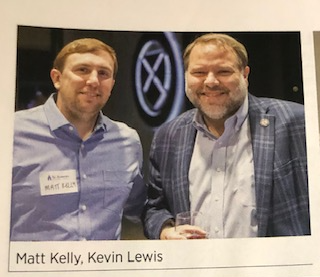
Other bad news I didn’t talk about in the last post: I got the stomach bug over Christmas break. As in knew I was going to be sick the minute we left the school alumni party on December 23rd. (Yes, the alumni party from which the picture of my non-alum husband–with Kevin!–has been splashed on the internet and Northside Sun; where was I, the actual alum, you rightly ask. Busily working the check-in table while simultaneously trying to squelch the rising tide of nausea I felt coming on is where I was. A picture of me would have been green so it’s definitely best Matt was left to represent the Kellys. He’s an honorary alum anyway. Blair, if you are reading this, I’m not actually fussy. I pinky promise.)
So back to stomach bug. Definitely thought it would be one of those awful but 24-hour things it usually is but because this was 2021, nay. I missed Christmas. All of them. Christmas Eve. Christmas day. Christmas with my family. Christmas with Matt’s family. All.Of.The.Christmases. I was seriously smote down. But good news: I didn’t miss a single day of school. (This is where you insert that emoji where its sarcastic smile is kind of sideways.) Better news: I am thinking of proposing a school policy where we can trade days of being sick on our own time for more personal days because clearly my body is never going to let me miss a day of school for sick days, just holidays. (Update and BAD news: I played myself because I wrote the previous sentence then immediately got Covid and missed two days of school. I’m an idiot who tested the universe and lost.)
Anyway, because of my being smote with Covid on the heels of being smote with the stomach bug (clearly, I’m not living right), here’s more bad news (OR, great news): I watched a lot of television. A LOT. A significant amount. An embarrassing amount. A glut. So much that I caught up on The Witcher, Emily in Paris, The Great British Baking Show, Riverdale, Legacies, Yellowstone, Succession, probably some others I’m not thinking of, and of course some Netflix movies. Embarrassing. Or awesome. You be the judge.
So, now, back to good news and my point overall. In watching all these shows, I am more convinced than ever that what we teach matters. I mean obviously what we teach matters from a skills and content perspective, but I’m more talking about the “being a functional human being who understands allusions and has a decent range of cultural literacy” kind of matters. Which the recent Wheel of Fortune “feather in your hat/lap/map” fiasco that made me want to pass out with simultaneous secondhand embarrassment and good-ole-fashioned dumbfoundedness has made abundantly clear is more important than ever (in case you missed it: watch here).
So anyway, what I gleaned from watching a running ton of television is that even though students may not remember every formula we teach or every rhetorical device we hammer, their “maths” just might come in handy for measuring on The Great British Baking Show or their history in understanding the displacement and marginalization of American Indians on Yellowstone. Or the running thread of Boo Radley on You or the reference on Criminal Minds to Mark Twain or even the Amazon Prime commercial with Medusa in it. Not to mention almost every monster on Vampire Diaries or Legacies such as the Basilisk, the Minotaur, Sirens, the Lady of the Lake, and the Green Knight, just to name a few. Or the allusions on the new Jack Reacher series to the Hydra and to Eudora Welty (point of clarification: Welty is NOT a monster, lest I worded that sentence confusingly). Or why Emily’s co-worker takes her to Gertrude Stein’s grave instead of Balzac’s for lunch in Emily in Paris or all, and I mean allllllllll, the super clever, sometimes subtle, sometimes not allusions of HBO’s Succession. Besides the clear Cyclops mention and Oedipus cracks, there is LITERALLY a character named Roman whose nickname is Romulus.
And then, just this last week, as my students began writing their papers on a specific archetype of their choice, I started watching Netflix’s frustrating show called Maid, and in the first meeting of Andie MacDowell’s character, the main character’s artsy mother, she is flitting around her canvases and creations yelling, almost out of breath: “Archetypes! You know about archetypes! That’s what I’m representing here. In COBALT! The hero, the everyman, the mentor, the mystic! And then of course there are Jungian archetypes…” And later her character, standing in front of a very spidery self-portrait mural, references the story of Arachne and specifically mentions Ovid’s Metamorphoses. My nerdy English and Classics brain just about explodes when things like these happen. Or the first episode in this current season of The Marvelous Mrs. Maisel in which she talks about her deep-seated need for revenge…Medea-level revenge. Which is kind of awkward because Midge definitely has two kids. So here’s hoping we aren’t really looking at a dark turn into infanticide by the end of the season. I could, however, totally get behind a flying dragon chariot.
Now, look, I know, I know. These things aren’t *totally necessary* for understanding the plots or even for analyzing the characters on some level. But how much deeper and smarter and better does everything become when it’s multi-layered? Like cake. Especially a corner piece. So much delicious icing. So let us not be dismayed when students do not remember exactly everything we attempt to instill; some of it will stick and some of it will not. Some of it might get them their dream job or the college of their choice. Some of it will be lost into the ether or filed behind something more important like Wordle starter words. But, just maybe, some of it will prepare them for all the practical parts of life. Like lazy weekends or, gods forbid, couch-compelling sicknesses. Either way, just maybe we, the bakers and the brick-layers, will have elevated their binge watching to *almost* academic. Just keep layering. Some of it will stick. Like spaghetti on Gilgamesh’s walls.
We don’t stop playing because we grow old; we grow old because we stop playing.
George Bernard Shaw
In the World of School, recess is spoken of in reverential tones, not only by students but also by teachers. The reasons range from the physiologically concrete to nostalgic to the abstract, depending on whom you talk to. For students, it’s a 30-40 minute window of relative freedom from the mental and physical containment that the classroom necessitates. Recess is a reprieve from the redirection of behaviors: the in-door voices please, waiting your turn, walking instead of running, sitting instead of standing, Chromebook privileges. It’s a safe space for moving bodies and for letting off that excess potent kid energy most adults (at least this one, here) wishes the FDA would approve as an over-the-counter stimulant.
Maybe most importantly–at least where our fourth grade is concerned–recess is a reliable mid-marker for where we are in our day. We all need that, no matter what age we happen to be. When our days lack a center, we often feel unmoored, even a little dissociative.
Teachers view recess as anything from a time for grownup talk with their coworkers; a chance to check phone messages, e-mail, engage digitally; a time for speed grading last week’s multiple choice test for Tuesday Papers; to a built-in bathroom break sans the existential anxiety of using the restroom during a lesson, sitting on the toilet, and wondering what chaos could be breaking out in your briefly unattended classroom (?!?!).
When nature calls, she doesn’t leave a voicemail, you know?
With my daily lunch/recess classroom rotation schedule, I have a chance to spend more one-on-one bonding time with each particular class over the course of the week. Each of the four classroom personalities is distinctive–each home to several microcosms of personality, enthusiasm, silliness, sweetness, budding hormones, and TikTok references.
Back in November, I decided to take to the swing set. As I walked towards the set, I was mildly catastrophizing in my head about my weight taking down the entire metal framing, someone getting a bone broken, emotional scarring for life… But, I don’t know, something told me I needed to do it, so I did.
I’ve revisited the swing set several times since then. I’ve matched pace and rhythm with students while pumping ourselves higher and higher, and talked about all sorts of things, answered questions about my own life, and given advice that I hope was my right to give. It’s the physicality of swinging that I miss most, and the feeling of being in the air, reaching the toes of my sneakers up towards a rogue cloud. On a more serious note, taking part in play has helped my mental health. One of the things I love about engaging with children is that each interaction forces me into the present; there is literally no time to ruminate or worry too much. I have to schedule my worries for later in the day, which I find is a good thing for me. In other words, recess is a portal away from the past and future. It only exists in the present, and to take part in that as an adult, we must submit to these rules.
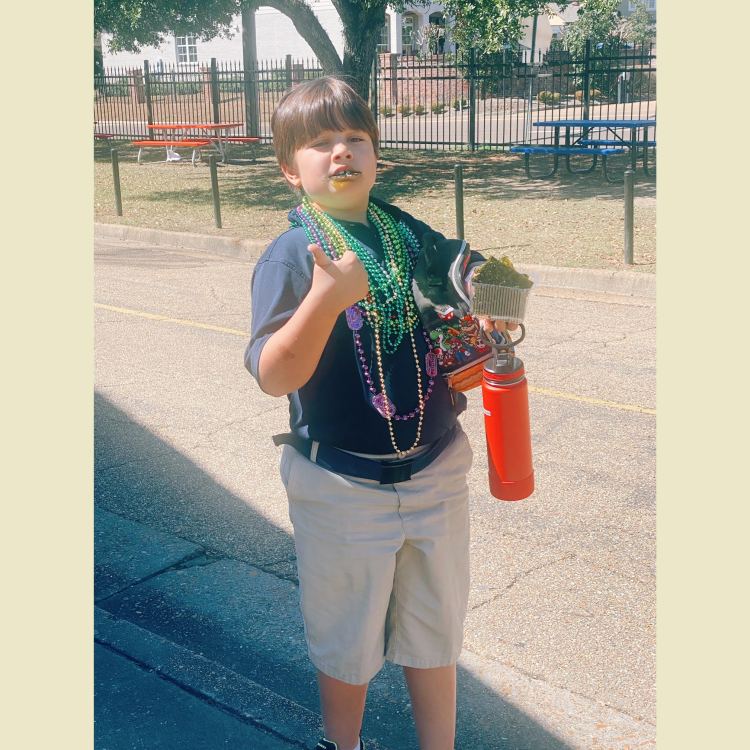
Here are some highlights of 4th Grade Recess, surreptitiously (or not so) captured and compiled by yours truly:
There is roughly one vending machine for every 25 people in Japan, the highest number of vending machines per capita in the world. It’s an often popularized factoid about the island nation, especially for Westerners. Just take a moment to think about what more than five million vending machines spread across a relatively small island looks like, where do they all go? It was certainly one of the more peculiarly distinctive realities of Japanese culture that I discovered while venturing around central Japan. It was both anachronistic and beautiful to walk through the woods in Nagano or the streets around a two-hundred year old ryokan (traditional, Japanese inns with tatami matts) to find, somewhere along the way, a lone vending machine with coffee, juice, and milk soda. If you’re curious about the latter, I won’t go down that rabbit hole, but you’re welcome to explore. Of course, my time in Japan was much bigger, more spiritual, and taught me so much more than what I found in coin operated machines, but vending machines are such a good metaphor for what I believe is happening, currently, in education. Insert money. Press a button. Receive.
If you know me at all, you know that I’m serially optimistic. It’s a blessing and a curse. So apologies in advance if my title seems like click-bait or this blog breaks with my typical demeanor, but I’ve become increasingly worried, in the time of a pandemic especially, that students are losing their ability to self-start. That their ability to think creatively and independently, something I believe they (we all) inherently possess, has been lost, to some extent, in the time of COVID-19, post COVID-19, and in the age of Siri, Alexa, & the Google (I’m sure he’s tracking me as I type this). Students are traversing through schools like consumers, thirsty for soft drinks.
Last week, Mr. Brister told me about a thought experiment he did in class that caught my attention. He began class as he always does, roll call, housekeeping, the usual, but on the whiteboard were a set of clear, enumerated instructions for his students. They needed to create a short skit, entirely in Spanish. They were allowed to use any tools available to them, including the internet and WordReference–a reliable, digital source for translating–to help them craft their skits. And of course, they were allowed to partner up. However, the most important caveat of this assignment was they weren’t allowed to ask Mr. Brister any questions. They needed to achieve their goal entirely alone, using only each other, their tools, and the instructions provided. For just one hour and twenty-five minutes, they couldn’t ask their teacher for help.
You might be asking, what’s the aim of such an assignment, beyond the obvious language learning outcomes. What might it prove to ask the students to work alone, without the help of their teacher? Moreover, what role does the teacher even play in a framework like this? To me, the answers are simple. Mr. Brister (and I would agree with him) wants to measure students’ independent, creative ability, in addition to their ability to complete a multi-step assignment, without needing to be given the precise means with which to accomplish the task. His goal, and invariably all of our goals as educators, are to equip our students with the tools they need, the skills necessary, to complete not just the tasks they face within our respective subjects, but more broadly–and perhaps more importantly–help lead them to finding themselves and their own capabilities. The same charge Virginia Woolf gives in her diary, “The thing is to free one’s self: to let it find its dimensions, not be impeded.” To do this takes stepping back and giving students both the opportunity to succeed and to fail.
This is no easy task. Students, particularly middle school students, are quick to seek immediate validation and confirmation they’re on the right track, so are adults. I’m certainly guilty of this. Many students will ask at the beginning of a new task or assignment, “How do I do this?” or “How do you want us to do this?” or some other variation of these questions–before even attempting to try risking failure or finding success. And though this is, I would argue, quite lazy as an approach to learning, it is also a deeply human instinct—the desire for immediate gratification. It keeps students (all of us) from the harder work of trial and error. The latter involves risk, analysis, and the potential for much greater reward.
We’re all familiar at least with the scientific method: observe/ask questions, research, hypothesize, test, analyze results/data, conclude, and report. It’s a cyclical loop. It’s keystone is built on the idea that even if failure happens, there’s always more questions to ask; therefore, more to learn, repeating the loop again. But in a moment, culturally, historically, when it is so easy to simply ask, “Hey, Alexa?” or “Hey, Siri?” when the answers to simple and complex questions alike are just a Google search away, what incentivizes students engaging in high-level, thoughtful inquisition? After all, I can quickly tell you that a chef’s hat has precisely 100 pleats or that Eleanor Roosevelt and Amelia Earhart once took an aviation joyride together to Baltimore, instead of attending a dinner in D.C. because Google. And while I’ll admit that these are simple trivia factoids, students, parents, anyone with a connection to the internet can quickly find whatever it is they’re looking for, without the need for much inquiry or creative problem solving for themselves. To be fair, this is also both the beauty of our current moment in history and also the problem. The ease with which we can access information is, frankly, pretty glorious, and quite helpful. But it’s equally exploitable, and occludes us from pondering, on our own, difficult questions.
It is, I would argue, part of the reason why the news is saturated with headlines like, “Students use AI rewrite tool to beat plagiarism checks,” “NFT marketplace halts most transactions due to proliferation of fake and plagiarized tokens,” “Rand Paul admits his plagiarism ‘is my fault’.” It’s also why the Department of Justice and others in the US continue to battle with China over claims of intellectual property theft. Clearly, these few examples aren’t representative of every student or individual, but they represent a growing sentiment among teachers and leaders who have been trying to educate, work, and live in a more digitally saturated age—certainly in the midst of a pandemic that has forced life to go entirely online in a lot of ways. If you’re curious about how this fits into the metaphor I created above, you should know that the quest to “hack” vending machines is a tale as old as time. We love the idea of free munchies. You can look deeper into the realities of vending machine tomfoolery by reading this article in Slate if you’re interested, but the TL;DR is that it’s not worth your time trying to manipulate vending machines. I would also argue that it’s entirely counterintuitive to the value of education to try and cheat the systems; however, grade-based economies, like vending machine economies, do nothing if not encourage finding shortcuts to getting that delicious end goal—the grade, those potato chips.
Students are not just more inclined to academic dishonesty in this framework. They’re also struggling to trust their own instincts and find validation in their own ability to get their work done. My earlier example from Mr. Brister’s class represents this problem precisely. He found that students were unable to complete the assignment without asking for validation or feedback or asking questions. They immediately began to ask him questions within the first few minutes of the assignment. “How do we do this?” they asked. “What do we need to get a ‘good’ grade?” But none of them were asking the more difficult, internal question of why Mr. Brister might be expecting them to take on a difficult challenge alone, why his decision to not help gives them more freedom to create their own work without the influence or pressure of trying to create purely to please Mr. Brister—a chance to find themselves in the assignment. Of course, this isn’t to say that the students are the issue entirely, in fact, I want to emphasize that I believe the system we’ve created, the grade based system, incentivizes finding shortcuts. So if anything, students are doing what the system encourages of them. And this is precisely why I’d like to encourage more inquiry-based learning that is entirely devoid of numerical valuation.
Everyone wants validation. I get that. Affirmation and validation are my middle names, so I empathize on a fundamental, deep in my soul, level. It’s probably because I’m a four on the Enneagram. But so often we do things for the reward or the affirmation, not simply for the sake of doing, just like students are quick to complete work merely for the sake of a grade, an often arbitrary number. They complete work based on what they think their teacher will like, not work they’re necessarily fully invested in or proud of. This particular kind of student-teacher relationship, transactionalism, feels much more like vending machine economics and less like education. What I deeply desire as an educator, what I think all of us desire, is for students to care less about GPAs and whether or not they’re an A, B, C, or XYZ student, and more about the intrinsic value of what they do at school. Why learning matters and what they’re truly interested in. Something that is, some might argue, impossible to truly teach.
Grade-based economies in education force students to build identity around numbers, numbers that are, if we’re (educators) being completely honest, at times arbitrary. For example, completion grades, or zeroes given solely because a student didn’t do the work, which doesn’t tell us anything about their inherent ability to do an assignment–just that they did or didn’t do it. Students develop identities around these numbers. Parents and teachers communicate about students and characterize students based on these numbers e.g. “Susie has always been an A student”; “Joey was never an A student, but he’s certainly not a D student.” Likewise, when students make something, complete an assignment, or take an assessment, it often feels as though they’re engaging in a transaction with their teacher, one where they expect, in return for whatever effort they put in, a “good” grade. But if or when students are let down by the number they receive in return–like getting the wrong drink from the vending machine, or having their snack get stuck on the glass–they feel slighted, let down because, again, in an economy where they’re identities, their futures, are wedded to numbers, numbers are self-defining. Sure, having a grade creates incentives for timeliness/time management, learning to comply with rules and guidelines. But can these outcomes also be accomplished without a numerical grade? When was the last time my boss gave me a numerical grade for the work I do day in and day out? Assessment can still happen without numbers associated with said assessment, and this doesn’t take away the ability to gauge competency with skills.
Authentic learning and work in the “real world” doesn’t, by and large, involve grades. Your physician, your dentist, your pilot on this upcoming Spring Break trip could have all been C students in their fields. But it doesn’t matter one way or the other. They’re still professionals. I care less about the grades they made and more about how they’re performing the skills they need, right now, to do their job. Conversely, in the grade-based model, students are buying progress from the education vending machine. The value of learning comes from the incentive of a good grade. Learning for the sake of learning is discouraged by the nature of the pressure to perform for a number. Students put in the work/effort necessary to get the item they want from the vending machine. I want an A; therefore, I perform and work accordingly. If I know a shortcut or way to jiggle the vending machine to make that A happen more easily, I might also take that opportunity, because, after all, gaming the system is part of navigating any numbers-based economic system.
While I don’t have all of the answers, there are a few things I often return to. The idea that less is more, and that our emphasis as educators on what is deemed important needs to shift away from numerical metrics and homework to skills metrics and doing more work at school.
School should be shorter, not longer, in my view. At the very least, it should start later. There’s science behind this. Kids need more sleep and they stay up later, naturally. Here’s some brain picking from The Atlantic on this issue. Or if you don’t fancy reading more, here’s a video from the same source. More ideally than a longer day with a later start, intended to match the American 40 hour work schedule, our school days should be centered around the science of learning and best practices. The current model has little to nothing to do with the pedagogical efficacy of “teaching” students for seven plus hours a day. In the current systems of American education, students are at school from 7:30 am to sometimes 5:00 pm purely because parents need some place and someone to watch their children. I know this sounds harsh or perhaps critical, but I cast no judgment. I just think it’s an honest assessment of how the system is structured. While this idea of a shorter academic day might seem entirely unachievable, it should be seen as an aim. Heck, reduce the work week. Can I get an amen? There’s plenty of recent evidence that shorter working weeks leads to happier, healthier, more productive adults as well. Feel free to explore that rabbit hole more if you like. At minimum, we should be giving our students more free time and less instructional time. Why? Because exploration, innovation, and deep learning happens when kids are left to their own devices to explore, innovate, and play. Recess is also learning. I’ll die on that hill. There’s also data to support this, so you don’t just have to take my word for it. According to a study out of George Washington University, as quoted in this article from Time,
In 2007, the Center on Education Policy at George Washington University found that 62% of school districts had increased the amount of time spent on English language arts or math in elementary schools since 2001, while 44% of school districts had cut down on time spent on other subjects. The survey showed that 20% of school districts had reduced recess time. According to the 2016 Shape of the Nation report, just 16% of states require elementary schools to provide daily recess.
Katie Reilly, Time
We’re, across the country, taking away time from our students because we’re playing a national game of numbers chasing. Between a history of wrestling with No Child Left Behind policies and our current infatuation with state standards, standardized testing, and data driven schooling, teachers—especially in the public school systems—often struggle with this pull between teaching for the sake of a test or standardized testing and teaching what they know is best for their students. Perhaps we don’t need this dichotomy at all. Maybe the answer is simpler than we thought: let kids play. Granted, this is slightly reductive of the complexities and nuance of the broader issue, but it goes without saying that students deserve more time to explore and be children. Adulting is hard. Save it for adults, or can we also make adulting easier too? I’d like some more recess myself. . .
Again, kids are at school from, roughly, 8 am to 3 pm. Seven hours a day, five days a week.
A couple of years ago, a former colleague, Chris Harth, showed me a chart he’d plotted out (based on student survey data from high schoolers at St. Andrew’s) of how much time students spend every day preparing for school, going to school, doing extracurricular activities, and you know, showering etc. Essentially, most students at St. Andrew’s (at that time) woke up around 6:30 am to be at school by 7:45 am. From there, they were at school until 3:15, unless they had sports or extracurriculars. Most students in 7th – 12th grade do, so that means they’re busy until after 4:30 pm though many are here until 5 or later. Considering also the nature of a metropolitan area and travel to and from places, students don’t get home until 5:00 pm at best. Factoring in also that students need to eat, use the bathroom/take care of personal hygiene, and do any other non-school related chores/responsibilities they may have—sleep also has to happen at some point—this, in good faith, only leaves students with a roughly three hour window every day to get things done and do whatever it is they enjoy doing to unwind. That means that the average student from grades seven through twelve needs to complete, at worst, seven classes worth of homework in a few hours and also enjoy their evening? This isn’t always the case. Obviously some days they’ll have more or less work, depending. And many students, especially at our school, have a study hall. But the point is simple and the same one that each and every adult argues most days: there isn’t enough time in the day. Students don’t just need more time. They deserve it. Dare I say all of us humans deserve more time to ourselves to just be who we are sans a mountain of responsibilities: human. As Eugene O’Neil says in Long Day’s Journey into Night, “It was a great mistake, my being born a man, I would have been much more successful as a seagull or a fish.” Clearly, he knew what I’m talking about. Sometimes, it’s gloriously perfect to just be.
Which leads me to my last point about homework. Homework, in the traditional, take-home sense, isn’t helpful, and it often doesn’t lead to deep learning. More often, it feels like an arbitrary numbers generator. We need grades. Notably, we need lots of little grades to help students out when they don’t do well on big grades. Which means we also need a decent amount of big grades because we don’t want a student’s grade to hinge on just one or two assignments. Students know this. Teachers and administrators plan for this. It’s expressly why I rewrote my entire grading system a couple of years ago to be “big grades” and “little grades,” if only to simplify my own thinking and student thinking about how grades work. But also because I understand that the nature of our grade-focused systems forces me to give students numbers, and I know that I need to give them as many opportunities to get “good” numbers as possible within this system, otherwise they run the risk of feeling like a failure. Likewise, parents feel like their child is lacking the necessary skills to move forward. Ultimately, I feel like the whole lot of us are trapped in this cycle of thinking that because Joey only, numerically speaking, understands seventy percent of what I’ve taught, he’s somehow on the cusp of failure. However, for some perspective, Steph Curry shoots roughly forty percent from the three-point line. Drew Brees has a seventy-four percent completion rate. Ty Cobb, The Georgia Peach, the best hitter in baseball history, got a hit only about thirty-seven percent of the time he walked up to the plate. Which is to say, numbers don’t accurately represent greatness and they’re subjective, relative, and don’t accurately depict the whole child (or athlete).
These are all, to be fair, big shifts in the way we think about teaching and learning. There are mountainous obstacles in the way of implementing changes of this magnitude on a larger scale, and I’ll admit that. However, this shouldn’t be a deterrence from thinking and talking about them and aiming to overcome them. The other option, of course, is to continue munching on snacks from the vending machine. Though, as I’ve tried to highlight here, this framework is to the detriment of not just our students, but our teachers, and parents. And it’s a rather reductive way of educating. Pursue grade. Get a grade. Move on. Repeat. Sometimes the best learning comes from simply, being, existing. As Walt Whitman says,
To be in any form, what is that?
(Round and round we go, all of us, and ever come back thither,)
If nothing lay more develop’d the quahaug in its callous shell were enough.
Mine is no callous shell,
I have instant conductors all over me whether I pass or stop,
They seize every object and lead it harmlessly through me.
I merely stir, press, feel with my fingers, and am happy,
Walt Whitman, Leaves of Grass
I think we could all use a little of that kind of happiness. More time for that kind of being, like the quahaug, and less time jumping through hoops. And I think once our students are given more time to be on their own, they’ll learn, like clams, to live in their own shells, pearls or no pearls. Until then, they’ll keep working to make their own jewels for a system that encourages only the shiniest.
4th graders in Señora Buford’s Spanish class have spent the last several weeks focusing on creating content to share all about St. Andrew’s Lower School with students in Perú.
Maya Buford, the Lower School Spanish teacher, began communicating in the fall with teachers from Lord Byron School in Arequipa, Perú. The teachers collaboratively came up with the idea that would allow 4th grade students at both schools to practice their newly learned Spanish and English vocabulary by creating a digital tour of their schools and talking about their classes (like modern-day pen pals, but with videos).
Our 4th grade students spent some time taking and collecting pictures of the different classrooms and special places at the lower school. They then worked in small groups collaborating on the development of a Google Slide deck to present their pictures, descriptions, and new vocabulary. Each small group then recorded a unique video where they introduced themselves in Spanish, and described our St. Andrew’s Lower School and the picture slideshow they created with their peers.
Although the project had some hiccups along the way, this was such an amazing experience for our students. They learned new Spanish vocabulary, developed collaboration skills, integrated technology, and had the opportunity to further develop their oral presentations skills.
Let me set the stage: A few years back, in the pre-pandemic world of education, I was a classroom teacher in a Mississippi Title 1 public school and a mom of four. I was never able to leave school until early evening and was mentally and physically exhausted by the end of each and every day.
On this particular day, I came home from school, collapsed on the couch, and was fighting the overwhelming urge to close my eyes and drift off to sleep. (This was one of the days where you feel so “done” that you just know you are not even being productive anymore…) As teachers and educators, no matter if you are in a public, private, or independent school, I think we can ALL relate to that feeling at some time or another.
I could not have been lying on that couch for more than 15 minutes when my wonderful husband (NOT being sarcastic here, he really is!) walks in from work, sees me lying there like some form of permanently exhausted pigeon, and says, “Honey, I know neither one of us feels like cooking. Let’s go to the Mexican restaurant for dinner.”
This is where the idea was born for a story in which educators everywhere could, hopefully, relate. This was just for fun, and I will tell it in a similar fashion to If you Give a Mouse a Cookie by Laura Numeroff.
Here it goes:
If You Ask a Teacher Out to Mexican
If you ask a teacher out to Mexican,
they’ll ask if you will drive.
She will pick herself up off the couch and guiltily glance at the school bag on the kitchen floor.
As she make her way to the car,
she’ll tell you how exhausted she is and that she doesn’t think she could drive that far.
You will drive to the restaurant. The warm sun on her face will make her feel like a cat,
so she will close her eyes and quickly take a nap.
After the short nap, she will realize she needs edible fuel,
so she will want to order queso and guacamole, too.
The salty chips will make her want something to quench her thirst,
so she looks at the drink options to decide what to get first.
The drink choices make her remember it’s a school night,
so she checks the time on her watch to see if it’s too tight.
Checking the time on her watch will make her think that it is 5 o’clock somewhere,
and she will ask what you think.
You will tell her it is still early,
so she will order a margarita and loves that the restaurant salt is pink.
Dinner is delicious and the server mentions a treat.
“Drinks are on special, so what will it be?”
She’ll think about all the work she has to do in that bag sitting on the floor,
but what will it matter if she waits to grade papers for one day more?
The procrastinated work will make her feel some guilt,
but you will reassure her with the slightest head tilt.
The second margarita will make her miss the beach.
You’ll promise to take the long, beach-route home and ask her what she thinks.
On the way home, the sun will be setting over the gulf,
so she will want to watch it and soak in the last of the sun.
Soaking up the sunset will make her think of the sand.
She will want to park and feel it cover her toes and her hands.
After she feels the sand, she will think about putting her toes in the water,
but chase the thoughts away with memories of something she read.
She will think of the article and with whom it was shared,
and remember her students and of lessons planned both past and ahead.
She will start thinking about what all needs to be done.
Her mental list will keep growing as you drive closer to home.
She will begin to feel the weight of her work as the ride continues on,
so she will stay up late working to try and lighten the load.
The late night of work will cause her to get very little sleep,
and chances are,
tomorrow, when you ask her to go out to dinner and are heading to the car,
she’ll tell you how exhausted she is and that she doesn’t think she could drive that far.
I wish you memorable lessons with your students, moments to witness their joy, and the balance between work and rest so that you don’t feel like some form of a permanently exhausted pigeon, too!
What makes February so special? Every February, the U.S. honors the contributions and sacrifices of African Americans who have helped shape the nation. Black History Month celebrates the rich cultural heritage, triumphs, and adversities that are an indelible part of our country’s history. Below are some projects and posters you can find in the Foundations building. Our littlest Saints have enjoyed learning about influential African Americans and working on projects to display out in the lobby for all to see.
Authored by Marty Kelly (and Upper School colleagues)
Hollie Marjanovic, Upper School Learning Facilitator
Have you ever had something that you never knew you really needed until you had it? Like something you lived your whole life without and now absolutely cannot live without? Like dry shampoo. Or a straightener. Or wine. Seriously, how did I ever live without them? They make my life so much easier, better, smoother, and enjoyable-er. You know what else does all that for me (and on a WAY more important level than giving me good hair and superficial confidence)? Our Upper School Learning Facilitator. I cannot live without Hollie Marjanovic.
When I was in high school here, we didn’t have a learning facilitator, so when I returned here to teach, I was skeptical (and as you all know, I hate change). My pretentious little first-year teaching self thought, “I mean what is a learning facilitator? I’m a teacher. I facilitate learning.” Um, no I do not. Well, I mean, yes, okay I do, but not Hollie-level which is next level. Now fast forward twelve years to now when I am ready and happy to say I was so wrong (and “when I’m wrong, I say I’m wrong”: name the movie!).
Now that I have her and know her, I cannot do my job without Hollie. She is my runway clearer, air traffic controller, pothole filler, fire putter-outer, rodeo wrangler, and left tackle blind side protector. That’s a number of metaphors, but you get it: she does everything. For everybody. Not just me. I’m not even sure what her actual job description is anymore, but I can guaran-darn-tee that she does that job and then about ten others. All while being her good-natured, good-humored, hilarious Hollie self. I mean who else can pull off getting hit on the head with a volleyball in front of the entire upper school student body while wearing a blow-up unicorn costume?
But Hollie isn’t just a fluffy unicorn. She is a boots-on-the ground do-er, and she gets it (whatever the “it” is of the hundreds she’s handling at the time) done efficiently and effectively. During the school day, you may catch a glimpse of Hollie as she scampers back and forth past our windows across the courtyard or across campus to steer rope various students for the rest of us. When I asked faculty for their input on what Hollie means to them, they captured her in the words “godsend,” “true Saint,” “gift,” “saving grace,” and “the best” (twice, and one time in all caps). Keep reading to see what else Upper School faculty had to say about Hollie, who, in the words of Tina Turner, is simply the best.
Colin Dunnigan: Hollie’s willingness to jump into issues with students has been phenomenal. She has become the de facto academic advisor/caretaker for every upper school student, carefully monitoring what they are doing, keeping up with what assignments are due in a dizzying array of classes, setting up tutoring sessions, getting extended time materials handled, calling parents who are upset about how their children are doing, reminding folks to update their assignments online, all while keeping a cool head and staying relentlessly positive. She has been a big help to me, but more importantly, she has been the saving grace for many students whom she has served through coaxing, cajoling, organizing, and keeping them focused, especially in times of challenge or crisis.
Ray McFarland: ALWAYS WILLING TO HELP….always with a smile…there seems to be nothing she can’t do ….if you need it organized she is the one to call…she is the definition of a good friend.
Jen Whitt: Hollie is always willing to share her time and institutional knowledge with me. Last year she patiently answered all of my questions. She was also a friendly face to talk to at events, which for a new person can be a bit daunting. She went out of her way to make sure that I felt welcomed.
Emily Philpott: Hollie is the best! Not only does she do everything she can to support students and teachers, but she is also a fantastic problem-solver. She figures out a way to make things happen, even when it causes more work for herself. And she does everything with a smile, when at times she would be justified in getting grumpy and frustrated (like today when I accidentally booked a meeting in the space that her study hall meets). We are all lucky that she is at St. Andrew’s!
Jim Foley: Hollie Marjanovic is a godsend to this Upper School. I honestly do not know where we would be without her. She has helped my students and me many times. To give but one example, Hollie has provided help to my tenth-grade World History II students with note-taking skills, study skills, and arranging for Writing Lab Fellows to work with these students on writing essays. Hollie also knows the students she helps and shares her knowledge with those students’ teachers. She is a true Saint
Russell Marsalis: When I first started working here at St. Andrew’s, there were two things I noticed right away about Hollie Marjanovic. First, was the passion and drive she has to care for our students both in the classroom and out. Second, was how hard she works to accomplish those tasks. Hollie is always willing to help out around the school when any issue arises. I know for me, personally, and many of the other coaches she is a huge help without student-athletes. She alerts us early on if there are behavior or academic issues so that we may correct them before a problem persists. How she still has enough energy once she lives work every day is beyond me because she pours so much of it into her job.
Jennifer Gunn: Hollie has been a great help to middle school students this year. She has helped me schedule math, English, and history tutors. Hollie is so knowledgeable of what students can be good mentors to younger students that her help has been invaluable to me.
Julie Rust: I have literally never been in a meeting where Hollie is involved when she didn’t bring up a point, topic, concern, suggestion, or idea that radically improved/informed the conversation or next steps. She is perhaps one of the most “with it” colleagues I’ve ever had. Hollie is not only good at figuring out the details that have been missed, she’s also quick to propose (and usually be part of) the solution. She is a fighter of a multitude of good fights every day and when I grow up I want to be her. 🙂
Linda Rodriguez: It is almost impossible to find Hollie. Whenever a student asks “Have you seen Mrs. Marjanovic?” I inevitably say, “She was just right here! But she’s gone now.” The truth is, Holie is one of the busiest people on campus. Her dedication to student success is admirable and chasing down kids is sweaty work. But no matter how many students she’s supporting, she is always gracious and smiling. Her teacher tool bag is full of student centered resources and she’s more than willing to share – it speaks to the priority she places on helping kids. We are lucky to have her…when we can find her!!
Sarah Spann: Hollie is the prime example of a giver with such a big heart. She does so much for the school and not just students but with her colleagues as well. She wants to help students be successful but she knows she can’t do it by herself. She’s selfless and constantly communicates to that particular faculty about a student that needs help or extra motivation. She has taught me a lot just by observing her and the attention to details that she has. She works so hard in wanting to make St. Andrew’s better. And it is better because of her. She’s selfless and genuine. Give credit where credit is due and Hollie deserves it. Thank you for all that you do Hollie.
Annie Elliott: When I ask how the US can be supportive when students lose a relative, have surgery, etc., folks often ask if we can help to alleviate concern about missed work or getting behind. I am so thankful that I can refer those families to Hollie and that she helps our students triage assignments and manage their workloads in those times of stress.
Lauren Powell: A giant heart for others. She works to make sure that everyone is cared for and attended to and she does it with a smile and an infectious laugh. She has a natural ability to attend to details, is organized, and has an awesome memory–great qualities for a learning facilitator. Hollie is tireless in her pursuit of folks who need help doing or finishing work. One of Hollie’s specialties is helping motivate students who are ‘not in the mood’ because she always seems to be in the mood to facilitate learning and growing.
Gracie Bellnap: The threads of Hollie’s influence are woven deeply into all facets of the St. Andrew’s experience. She makes me feel connected and inspires me to be a better teacher and friend.
Dan Roach: Speaking both as a teacher and a coach, I have the utmost appreciation for the way Hollie manages our student-athletes and helps keep them on track with all their assignments (particularly when one or two may be missing or late). She keeps teachers and coaches connected in our collective mission for the academic and athletic success of student-athletes. One might say that she acts as a conduit between the academic and the athletic realms of our school. Kudos to our Learning Facilitator Hollie Marjanovic!
Emmi Sprayberry: Hollie Marjanovic is one of the most dedicated individuals I know. She works tirelessly to provide support to students and parents. Her persistence, wisdom, and ability to keep a cool head is coupled with an amazing sense of humor and positivity which always leaves me encouraged and amazed. She is always ready to help, even when her plate is overly full. Time after time I have seen her step in and step up, a constant communicator making things happen. I honestly don’t know what this community would do without her. To say Hollie Marjanovic is a saint would probably be an understatement for all that she does.
Darin Maier: Here’s one for you — after getting her kids home on Friday, she came back out and judged two debates for us on Friday evening at the Saints Classic. This is not the first time she has answered the call when we’ve needed folks to come out and help.
Lara Kees: We all know that she’s great at keeping up with many kids and their work AND taking the load off of us, all while staying cheery and optimistic. She’s always up for the various contests & games–ready to take a pie in the face, e.g.
Claire Whitehurst: Hollie is a completely joyful gift everyday. Seeing her always makes me feel like I have someone in my corner no matter what. She also has one of the best laughs I’ve ever heard. St. Andrew’s is incredibly lucky to have her on the team! She is also equally loved and cherished by all of the students. She’s on top of everything. She lent me a cake dish in the midst of finals last semester. She’s just THE BEST!
If the past two years have taught me anything, it’s that teaching was never easy, and a global pandemic only served to make the challenges of this career even more daunting. Trying to make deep, meaningful connections with twelve & thirteen-year-olds behind the veil of a Zoom or Google Meet screen is equivalent to betting on early investments in “a unicorn” startup company. Which is to say, one rarely picks the right startup company, and I think secondary education met her match when she tried to wrestle with virtual learning. And though we’re not fully out of the woods yet, I’m grateful we’ve all come this far as best we could.
What has buoyed me in these rough waters were the little kindnesses from students and colleagues. A thank you note here or a comment by a student there. A Christmas gift. An email from a now high schooler, post-peak pandemic to let me know that they missed seeing me in person and having my class now that they’ve moved across the crosswalk. Which is one reason why I was inspired to begin this “Attitudes of Gratitude” blog series. I wanted to give students a chance to publicly express themselves and their gratitude for their teachers. This month, we get to hear from the seventh graders and their appreciation for the seventh grade team. I hope you enjoy it as much as I’ve enjoyed reading their comments and writing this blog!
“I appreciate Mr. Goldsbury very much because his class is fun, and he makes a lot of jokes that are funny and keep his class entertaining. When we are learning things, he always finds a way to make it enjoyable. And I’m excited to dissect pigs!
I also appreciate Coach Spann because I talk to her about my life problems, and she always listens. She is fun to be around, and she lets us play in the gym sometimes during Study Hall if our work is done. She’s so nice and funny”
“I like Mrs. King because she is always trying to make us feel happy. I also like how she is a new teacher because, since she is new, we can tell her stuff about the school. I also like how she gives us homework passes because some students have a hard time with homework and that helps.”
“Mr. Julius is very fun. He makes me like creating stories. He also asks us questions of the day which make my day a bit not boring. Mr. Julius is also a relatable teacher. He’s friendly, and I appreciate that!”
“Mrs. Johnson is a great teacher because she gets straight to the point and doesn’t stall class time. This makes it a lot easier for us to learn. Choir is one of those classes that you need to learn something fast in order to practice.”
“I really like Mrs. Newburger’s class because she’s very laid back and an amazing teacher. Even though math is hard, I appreciate how she tries to help us.”
“Mrs. Irons is one of my favorite teachers. She makes good assignments and is encouraging to all her students.”
“I appreciate Dr. Clark’s class because she is friendly and gives the class some say in what we do. We get breaks often and she takes her time to let everyone understand the subject.”
“I love Coach K.J.’s class because he shows us how to win an argument. He cares about us and I always look forward to coming to his class.
I also love Mrs. Runnel’s and Mrs. Gunn’s class because they help us with assignments for other classes. I really feel they like teaching and care about me.”
“I love Mrs. Venters because she makes our class a cool environment and makes it that our drama class is a fun break from real classes.”
“I really loved Mr. Rennie. He was so nice to our classes and he would let us have second chances (with corrections), but then also he would let us work at our own pace and even give us breaks as a breather. I really hope he comes back one day.”
“I appreciate Dr. Cranford because not only do I get to learn a new instrument, I can (re)learn things that I’ve either been taught by my piano teacher(s) or not. He has made the band a fun class, even with all the events we participate in.
It’s also pretty surprising how Dr. Clark is able to handle three different grades. It seems pretty hard to keep up with whatever each grade has learned, as they’re all on different levels. Translating Latin is pretty hard, but I’m sure that with Dr. Clark’s guidance, I will be fine.”
“Mr. Rennie is one of my favorite teachers because whenever you need help with a math problem he will help you the best way possible to help you find the answer very quickly, and he will also write an example on the board too.
Dr. Cranford is one of my other favorite teachers because when our instruments are having problems and stuff, he will fix it for us, and whenever we forget to bring our music book he always will have a spare one that we can use. He also usually leaves somewhere around 5:30 each day, just in case we need to practice in his room.”
“Mr. Goldsbury is one of my favorite 7th grade teachers, he is also one of my favorite teachers I’ve had so far being at the middle school. His classes are fun and interesting and I always leave the classroom with new knowledge of science. He teaches in a way that you can easily comprehend the lessons he teaches. He fosters a very good learning environment that helps the students excel in science, and I appreciate that.”
“When you ask me ‘Who is the best coach?” the answer is always Coach Spann. I love Coach Spann because she’s someone I can talk to about anything. When I’m feeling sad, I like to go to her because I know she will always cheer me up.”
“I love Mrs. Newburger’s class because she always stops to make sure everyone fully understands what she is teaching. Even if no one asks a question she will still check you know it by going around the classroom and checking on each student individually. By doing this it shows that she really cares about her students and I appreciate that.”
“I love Mama J., Mrs. Johnson, because she is really nice and funny. She also gives us candy. She has a lot of patience to deal with our classes.”
“I enjoy Mr. Julius’ class. We get to discuss all sorts of fun topics. We read different kinds of books too. Some are goofy and some are really sad. The way that he teaches brings joy to me, and Mr. Julius is the teacher that I wish all teachers were like.”
“I love Mrs. Venters’ class because she is always making us laugh. She is always coming up with games for us to play. When it comes time for us to plan out a play, she is always listening to our suggestions and making us smile.”
“I like Mrs. King’s class, even though I don’t like history. Mrs. King’s nearpods make it very fun to learn in class, and they are very entertaining. I enjoy her room too. She has a very calm environment in her room, and she never yells at us.”
“Mr. Brister is one of my favorite teachers because he actually understands students and what they go through. I remember a time when a friend and I were talking about why we couldn’t go outside. He said we should go outside, but he understood why we didn’t want to and empathized with us. Spanish is also amazing because he helps us with our grammar and how to say real sentences.”
When I was a fresh-faced 21-year-old middle school ELA teacher with big ideas and way too much confidence, I knew I was going to crush my admin’s class observation and evaluation. I loved these kids. They loved me. We were whirling through novels and grammar concepts and writing projects like nobody’s business. I had high standards, but also tons of scaffolds and high thresholds for fun. The morning of the observation I can still picture my principal sitting in the back row. We’d just had a robust conversation about a quote of the day, and I had rocked a mini lesson on sentence fragments versus run-ons. As I passed out a quick worksheet to serve as a formative assessment on the concept, Jimmy, a particularly brilliant and ornery 8th grader (my favorite kind of adolescent challenge), sighed loudly. “What’s up?” I asked. “I feel like there’s so much busy work in here,” he said, rolling his eyes. “What does this class have to do with my future, with the real world?”
I thought it was a great question, and it provided the perfect segue for me to provide some real world examples of grammar mistakes in resumes that didn’t result in an interview. In other words, as I expected, I crushed my evaluation. Except, according to my principal at the time during our debrief, I didn’t. I got major marks down in the classroom management section of the rubric. “What Jimmy said … that was blatant disrespect,” she said. “You shouldn’t have taken his comment seriously. You should have punished him and moved on.” My face flushed hot and red as I walked back to my room. “She’s just super traditional,” I thought, “responsive teaching is more important than silencing kids.”
Now with nearly twenty more years under my belt, I think we were both right. I think kids need direction on how and when to share their opinions and beliefs in appropriate, respectful, and positive ways. And I think they deserve constant reminders about how what we are doing in our classrooms links up to their past-present-futures. That’s why I am so excited to share with you Val Prado’s super-dope $450,000 Project.
Val knew her students needed practice with determining the value of a percentage of a given number, but she didn’t want to give them more rows of artificial math problems. By fake-gifting her sixth grade math students with a $450,000 inheritance and then asking them to responsibly spend the sum among charity, housing, transportation, education, vacation, and savings, she provided her students more than just numeracy practice; she helped them begin to think about spending, shopping, finances, and budgets. Sure, the work in creating the assignment far surpassed creating a worksheet, but so did the benefits gleaned by the students working the project.
I have a feeling Jimmy would have approved of the $450,000 Project. In fact, he wouldn’t have even needed to ask what math had to do with the real world; the connection is in-your-face blatant. More importantly, Val’s sixth graders gave this assignment a big seal of approval. While I was doing carpool duty about a month or two ago, a sixth grader, unprovoked, shouted something into the wind as she made her way to the flagpole. “What?” I said, buttoning my coat to cut the chill. “I said math was SO FUN TODAY!” she said. She went on to describe the $450,000 project, not knowing that I was already planning on blogging about the thing and had been in touch with Val about it.
Sometimes our students need relevance. Sometimes they need fun. And when we are really lucky, the two things, the work of relevance and the play of fun, swirl together to coalesce into an assignment that is really meaningful.
There are so many reasons to celebrate this time of year. The holidays, of course, but in our school world we are celebrating the end of the 1st semester and all of the accomplishments, big and small, of our teachers and students.
Join me as we take a short visual journey through recent pictures of some of our amazing lower school students working and growing! (Did I mention short? Learning is so much fun that I forget to stop and snap pictures!)
First stop…
4th grade students worked with a partner or small group as they researched and chose a method to share and teach others about topics related to American history and as the title of the 4th grade play suggests, American Voices! Students chose ways to share their research in a variety of ways to be included on this mall covering timeline including: a graphic novel, a video blog, Google Slides presentations, diorama, posters, and so much more!
Next up…
Learn and eat!?!? I’m a little sad that I didn’t get to join class for this activity, but what a fun and engaging way for 4th graders to learn about the phases of the moon in Ms. Cosgrave’s class. This is one opportunity where the students can actually eat their work. No blaming it on the dog here!
And moving right along…
1st graders made direct fossils by creating petrified paper. They then explored trace fossils by creating footprints of our very own St. Andrew’s kid-o-sauruses in science class!
Speaking of 1st graders. Do you know the actual measurements of the Mayflower? Our 1st graders do! The 1st grade students, along with their teachers, joined me on the May Day Field as they worked on estimating, on a very grand scale, and then measuring out the length and width of the actual Mayflower ship. (Grand visions of creating parts of the ship like rails or the bow to scale danced through our heads, but alas, there just isn’t enough time in a teacher’s day to build a Mayflower replica, even if it would be made out of cardboard and paper. A teacher can dream, can’t they?)
Our next stop…
The 3rd grade students recently accepted a mission, Mission:Impossible, as they learned how to navigate the world of Google. Not just “googling” in the search engine, but the applications in the Google Suite. It can really feel like a scary and foreign land for beginners. The students acted out conversations with mission control to help remember keyboard commands on their chromebooks, and then used Google Slides as a tool to help collect information for their research project.
The research project mentioned above: Owls! 3rd grade students are building their background knowledge and developing research and writing skills as they discover and write about owls in preparation for their upcoming novel study of Poppy by Avi.
And our final stop…
2nd graders are discovering ways that writing, history, the nativity, art, nature, and technology can all come together in a super special and meaningful way. Sorry, ladies and gentlemen, only a sneak peek here. These 2nd graders want to do the grand reveal at the end of the week.
I hope you enjoyed seeing and reading about a few of the special things happening in the lower school! The growth of our students is always something to celebrate!
Students in David Bramlett’s statistics class put their learning on display this week through collaborative poster sessions this week. The project was a powerful way to put their semester’s learning to use, and presenting to small groups (rather than a formal speech to an entire class) was hugely preferred by the students. Of course, as with all larger scale projects, the journey wasn’t always smooth, such as when it was discovered (too late) that a free survey monkey account doesn’t allow an unlimited sample of participants. Nevertheless, students pushed through and applied their learning in interesting ways. David noticed that this particular project brought out motivated participation in a student that wasn’t always the most outwardly excited by math. One tension he’s still wrestling with is how to fairly and objectively assess projects like this beyond a checklist-like approach.
Want to see all of the posters? Take a gander at them in the north campus library. Interested in how Bramlett framed the assignment? See the snippets from his project description below:
For the final project, you address some questions that interest you with the statistical methodology you learned in Statistics. You choose the question; you decide how to collect data; you do the analyses. The questions can address almost any topic (although I have veto power), including topics in psychology, sociology, natural science, medicine, public policy, sports, law, etc.The final project requires you to synthesize all the material from the course. Hence, it’s one of the best ways to solidify your understanding of statistical methods. Plus, you get answers to issues that pique your intellectual curiosity.
Your project will be presented in a poster session during the last week of class. In a poster session, each group makes visual materials that explain the project. Then, people wander around looking at the posters and talking to the presenters, thereby learning about the various projects. Poster sessions are extremely common at professional conferences in many disciplines, including statistics. In our poster session, one member of each group will be stationed at the poster to answer questions, while the other member wanders around to examine the projects. The poster-sitters and wanderers switch off after the wanderers have examined all the posters.
Since I began working at St. Andrew’s, I have kept a string of cards running across the windows of my classroom. Something over twenty feet of cards. Each card is from a student or colleague, and is a catalogue of gratitude over the course of the four years that I’ve been a teacher here. It has grown from one string to three. And will continue to expand the longer I teach here. But this little piece of my history at St. Andrew’s is, I think, the perfect example of why gratitude (little things like a Christmas card or a thank you card to end the year) goes such a long way. Rereading these cards every year, for me, is a buoy that keeps me afloat. It reminds me why I do what I do. Because, candidly, being a Middle School teacher isn’t easy!
Last month, I asked the 5th graders to catalogue their gratitude for the 5th grade team of teachers by simply telling me two teachers they appreciated and why. It was so joyful that we decided to keep the spirit alive for each grade. This month, the sixth graders have shared their little joys with us, and they are equally endearing and inspiring.
“Mr. Brister is one of my favorite Spanish teachers because he is very chill and likes to play with us. Yes, we can be a handful, but he has a lot of patience with us and teaches us things in a fun way. We do lots of Spanish games, which helps me learn my Spanish better. #BestSpanishTeacher #MyFAVSPANISHTEACHER”
“I really enjoy Mrs Colletti’s classes. She is a really fun teacher and allows us to give her our opinions on books we read. She is also really kind to us and thinks of fun activities.”
“I really love Mrs Burke’s classes. She always greets us outside the door before class and likes to join our conversations at lunch. She is also really fun to be around.”
“I love Mr. Anderson’s class because he teaches us about Speech & Debate. Some Days he takes us outside for brain breaks to play Gaga Ball & Basketball!”
“I love Ms. Venter’s class because she has a way to keep us focused but also having fun. She brings in a lot of positive energy and lets us play games. The way she teaches makes me anticipate Green Block everyday.”
“I love Dr. Clark’s class because she is very flexible tries to make sure we really understand things in Latin before we move on to something else.”
“I love Mrs. Truckner because she is an amazing teacher and advisor. She lets us give our opinion. Also, Dr. Cranford, because he gives us mask breaks, and I know his door is always open to talk.”
“Mrs. Prado is fun and always teaches in ways that help the students. She doesn’t just teach her personally preferred method, she always gives us options on methods to do problems.”
“I love Mrs. Watt because whenever someone doubts themselves then she believes in them and tries to encourage them to push themselves to their best. Mrs. Watt cares for all of her students and engages in our conversations when we talk. Mrs. Watt is the best choir/music teacher, and there are still more reasons why I love Mrs. Watt, but it would take me five paragraphs to explain.”
“Mrs. Truckner is one of my favorite teachers because she is really nice and flexible. When I went to Disneyland and missed stuff, she helped me!I also like the way she teaches, the class is generally fun and challenges me, and I like history 🙂
“Mrs. Prado is one of the best teachers because sometimes she teaches us math in a fun way like Kahoot and Math Knockout. She teaches math in a way that everyone can remember, and she has a way of magically un-confusing people.”
“I love Mrs. Colletti’s class. She understands people if they have a different way of learning, and she tries to make her class as fun as possible, even if the thing we are doing is kinda boring.”
“Mr. Brister is one of my favorite teachers because he is funny and makes me happy. He is able to connect with all of us in different ways. He calls me G.O.A.T, and calls Nicholas Bruce, and sings Layla’s name. He gives us brain breaks, lets us “take a walk” and does so many things that make everyone appreciate him.”
What I have loved about this blog project is the sincerity of each student’s comment(s). They have all taken the opportunity to write about the teachers they love and appreciate, and they’ve done so candidly. The results have been both precious and heartwarming, and a little silly. I don’t think students always take the time, in writing, to talk about their teachers and what they enjoy about their classes, and I’ve had so much fun putting this blog together as a way for students to catalogue those joys!
Coach Russell Marsalis partnered with Hollie Marjanovic during lunch on Monday of finals week to give upper school students a very different kind of pep talk.
What better person to present on the topic of stress in a “high stakes” situation than Russell Marsalis, who coached in (and won) his first basketball state championship last March?! Coach Marsalis did a fantastic job of explaining that every game you play is just a game–whether it is the first game of the season with no one watching or a state championship. He advocated for students to treat them all the same and give just as much effort. This is also true of exams–in the end they are just a big test; do not let the hype around them get you psyched out of your mind. Additionally, always make your practices tougher than the games; that way, you will never encounter a situation in a game that you did not already anticipate. Students left the session empowered to ask the questions to teachers and classmates to help you them understand and put in the time and mental effort needed to make those study sessions count. So the next time you need a little academic reinforcement, consider partnering with one of our athletic pros in the ARC. It turns out that coaching has a whole lot in common with solid teaching and learning.
I have a theory that we as humans need tribes. As much as we all subscribe to the great unifying collectivity of our species, the notion of “we’re all in this together” can simply be too big for our small selves to contain. We need groups the size of “I can hold you in my head all at once”, shared identities that warm us with familiarity, a sense of “these people are mine” and “this place is home.” I think, to a certain degree, our grade-level, departmental, or divisional affiliations can serve as our work families. I think this is natural. I think this is human.
In this current job role of mine, I have the strange position of belonging to no single divisional or even campus tribe. I float-drive across I-55 from south to north and north to south countless times each week, sometimes more than once each day. On a given Tuesday, I might play-learn in centers with some three year olds, pop in an eighth grade level meeting, visit a senior-level English class, and engage in a classroom debrief with a second grade teacher. It is the greatest joy and the greatest challenge of this job, this “every division is my home” which can sometimes feel a bit like “no division is my home.”
But one magical side effect of this nomad-like existence is that I can see, with vivid veracity, the patterns, the themes, the stories that surface and repeat again and again across our very-different, very-same everyday classroom realities. It’s probably slightly annoying to have a classroom visit debrief with me these days, so eager I am to connect the dots, to say “we are also seeing _____ in _____ context!” These are all my clumsy efforts to shout the same refrain: “You are not alone in your struggles . . . they are entirely legitimate!” Or, as the kids say nowadays: “SAME!”
But this blog is not about my clumsy efforts. This blog is about highlighting Foundations, since our regular and fabulous Foundations blogger (Maggie Secrest) is out nurturing a familial tribe of her own right now. See, I think we as faculty at St. Andrew’s, whether we teach two year olds or fifteen year olds, have a lot more in common than we think. And part of our goal with these monthly blog blasts is to connect some of those dots that tend to exist on separate islands within the same school network.
So, without further ado, here arefour ways that teaching two year olds is a whole lot like teaching whatever grade you teach, brought to you by images I snapped one rainy early Mid-November morning while observing Sandra Flores and Maggie Secrest work their magic. I hope you experience a little beat of resonance, a moment of synchronization, a vibe of “oh yeah I do that too” in what you see. And I hope that this helps expand all of our conceptualizations of what constitutes our work-tribe here at SA.
We are all giving students performance tasks that naturally adjust to, showcase, and accommodate their skill level and interests: Whether students are working with pottery in upper school art, crafting an essay in eighth grade English, or putting rubber-bands on a pumpkinit’s all the same thing. We as faculty are all about seeing what kids can do with the challenge at hand, and while we rarely have a single “right” product in mind we often have ideas about how to bump up student performance to the next level.
We believe that we learn best in community, that collective meaning-making may get messy but can push us all to greater heights that individual pursuits: When kids are actually helping pour the sand into the center, when ninth graders are sitting around a Harkness table and going deep into historical analysis, it may take extra time and extra clean-up after the fact . . . but the learning gained is worth the mess.
Children in the “young twos” class work together pouring sand into a bin for a center to play with later.
The older twos were WAY into this game of shape review. The hard part was being silent when it wasn’t your turn and you knew the answer.
We know that part of the schooling game is learning how to be better humans.: This year more than any year it is clear that we teach academic content and skills to navigate the world together. The two buckets are not in opposition to each other; they, in fact, prop each other up. And play is one powerful anchor for both pursuits.
We love to plan and prepare, but are also open to adapt and adjust when our students surprise us with how they take up a task or material: Whether you are a math teacher celebrating how a student found a new way to approach a problem solve or a Foundations teacher allowing kids to flip over the coloring sheet to draw their own shapes, the same spirit of humility, openness, and celebration undergirds our response to the surprises at hand.
This kid was totally into this halloween pumpkin sticker that he wanted to show me again and again. It was starting to lose its “stickiness” but, no matter. It was still his favorite and most treasured thing.
(*Please, at least one person, tell me you get this reference.)
Authored by Marty Kelly
In my last post I confessed to not reading any books this semester. Well, technically I think I confessed to not finishing any books this semester. Which honestly is weirder than my saying I haven’t started any books. You see, I can go through dry spells without reading, but when I do pick up a book, I must finish it. Like, immediately. Books and bottles of wine: I never start what I can’t finish. So the fact that Troy: Lord of the Silver Bow by David Gemmell sits looking at me, only partially-read on my bedside table is, for me, akin to my mother’s raised, reproving eyebrow. Or The Office’s Kelly Kapoor when she demands of Ryan the temp, “I have a lot of questions. Number one: How dare you?”
Seriously, how dare I. Especially since I am the person who, when taking a three day beach trip, packs (at minimum) three books because I know I will read one for every day I am there. And it’s not like I am reading rigorous, academic tomes outside of school. My husband, whom we will also generously call a reader because he reads online articles about sports, makes fun of my penchant for reading anything with “girl” in the title. I mean, in looking back at my list of books I’ve read, I see it’s not *exactly* untrue. I’ve got at least 19 girl-ridden titles under my belt: Gone Girl, The Girl on the Train, Luckiest Girl Alive, The Girl with the Dragon Tattoo/in the Spider’s Web/who Kicked the Hornets’ Nest/who Takes an Eye for an Eye, All the Missing Girls, The French Girl, The Perfect Girl, The Girls, Local Girl Missing, The Girl With No Past, The Girl in the Ice, The Perfect Girlfriend, The Good Girl, Woman in the Window, The Kept Woman, The Woman in Cabin 10… okay so some of them matured into “woman,” but still, this is getting embarrassing.
As a teacher of primarily classical literature, I really should be highlighting the other genre of books I love, which I call revisionist fiction (some just call it “retellings”; some call it “historical fiction” but that label is a fiction itself; but the best description is probably “parallel novels”): I’m talking about the books that revisit myths to expand on the story or explore the story from a different perspective. Some of these include Circe and The Song of Achilles by Madeline Miller, The Silence of the Girls by Pat Barker (yeah, girls again, I know), The Penelopiad by Margaret Atwood, A Thousand Ships by Natalie Haynes, and that cheeky little Lord of the Silver Bow by David Gemmell that judges me from my nightstand. And now, we’ve come full circle. So in another episode of what I call “getting other people to do my job for me” (and to live vicariously through those around me who are indeed still reading), I asked other Upper School faculty to recommend some books for us, just in time for the holiday break!
Blake Ware: I’m in the midst of The Art of Loading Brush by Wendell Berry. It’s been good. He’s basically a cranky old agrarian who is critiquing modernity, which is different from his more well-known fiction, although obviously on brand.
Dawn Denham: I read 100 pages of The Sun Also Rises on the plane yesterday. Because my son had it on his coffee table and because I’ve never read it and because many of my students did last year!
Lara Kees: I read Home, by Marilynne Robinson. It’s part of her Gilead quartet (I guess that’s the term–there are four). Anyway, I loved it and those books in general. Small-town life in Iowa in the 1950s-ish. I find Robinson very insightful in terms of the real, felt effect religion has in everyday American life.
Gracie Bellnap: I finished Song of Achilles (interesting read since I completely forgot about the movie Troy and the myth), Alice in Wonderland (haven’t read it since I was a kid and it was just as weird and wonderful as I remember), and Comfort Me with Apples (A wickedly weird and dark and twisted story— more like a novella— that I read in an hour and loved so much), and I am almost finished with The Four Winds (a horribly depressing book following a mom/daughter through their life during the Great Depression in west Texas and California).
Catherine Bishop: I had totally planned on reading Dispatches from Pluto, but the best laid plans… it’s definitely on my list, though.
Lauren Powell: I started reading A Gentleman in Moscow, almost done. The review does a much better job of explaining why this book is so marvelous but I love the characters, the Russian history, and the seamless connections between things like the importance of a great meal, the necessity of a life philosophy, and the art of finding meaning in life. https://www.goodreads.com/book/show/34066798-a-gentleman-in-moscow
Claire Whitehurst: I just finished GRASS, a graphic novel by Keum Suk Gendry-Kim, about Korean comfort women in Japan during WW2. It was gorgeous!
Burton Inman: Right before Thanksgiving, I recently read Anxious People, Fredrik Backman’s latest novel and I LOVED it! I’ve read a few of his works before this one and was so eager to read it given how much I loved A Man Called Ove and Us Against You.
In this book, Backman does such an excellent job of weaving together multiple story lines and placing these different characters together in a way that is just so charming and engaging. I loved the way that he writes about human beings and the simple, common struggles that we all have. A bank robbery turned hostage situation can warm your heart and make you laugh–yes, you read that right!
Linda Rodriguez: I have a few favorites that you might like:
Hamnet by Maggie O’Farrell – great backstory about Shakespeare’s family
The Red Tent by Anita Diamant – explores ancient womanhood through the story of Dinah, Biblical Jacob’s daughter
Till We Have Faces by CS Lewis – the Cupid and Psyche myth retold
The House on the Strand by Daphne Du Maurier – a classic time travel story with a twist
Silver Pigs by Lindsey Davis – murder mystery set in the ancient Roman world
Marks McWhorter:The Selfish Gene by Richard Dawkins: it’s the most impactful book I have ever read in regard to how I look at science as a whole.
Kendra Perkins: I re-read an old favorite (Skellig by David Almond), it’s a middle school book, but it’s one of those that’s such a powerful story and such incredible writing that it’s a wonderful read at any age. This author is British so you can enjoy the fun language he uses so well to tell this story.
This (12 Rules for Life: An Antidote to Chaos by Jordan Peterson) is one of those books that I wish had been published when I was younger. It has revolutionary, yet simple ideas to help anyone navigate through the trials and tribulations of life with a practical and positive outlook.